Showing posts with label Porsche lease. Show all posts

Thursday, June 2, 2011

2011 Porsche Panamera Turbo S

2011 Porsche Panamera Turbo S
Panamera Turbo S can be attributed to two main enhancements: Improved turbochargers with titanium-aluminium turbine wheels and modified engine control. The use of the innovative titanium-aluminium alloy reduces the weight of the turbine and compressor wheel. This results in a lower moment of inertia and thus in improved and more agile engine responsiveness.

The new Panamera Turbo S is a unique combination of performance and efficiency, driving dynamics and comfort. The 4.8 litre, V8 biturbo charged engine delivers 550 hp (410 kW), ten percent or 50 hp (37 kW) more than the already very powerful engine in the Panamera Turbo. By the same token, the torque also increases from 700 to 750 Nm. In the “Sport” and “Sport Plus” mode of the standard Sport Chrono Package Turbo and during kick-down in normal mode, the eight cylinder engine delivers fully 800 Nm with the so-called overboost function.

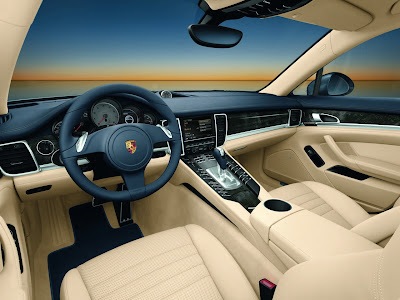
The sporty character of the new Panamera Turbo S is apparent not just in its performance but is also reflected on the exterior. The 20-inch Turbo II wheels with increased rear axle track width, side skirts from the Porsche Exclusive range and the adaptive extending four-way rear spoiler in the exterior colour ensure particularly sporty performance and look. The fusion of exclusivity and sportiness is conveyed in the interior by the bi-colour leather finish, fitted as standard. The new combination of black/cream is offered exclusively for the new Panamera Turbo S with agate grey/cream also being added as an exclusive combination from the autumn.

The Panamera Turbo S costs 167,076 euro in Germany, including VAT and country-specific equipment. Deliveries start in June 2011.

2011 Porsche Panamera Turbo

2011 Porsche Panamera Turbo
Panamera - the first all-new Porsche in seven years - to the public in April 2009 at Auto Shanghai, it marked the official birth date of the fourth model in the Porsche family, joining the iconic Porsche 911 Carrera, the Boxster and Cayman, and the Cayenne. The Chinese launch also marked the culmination of five years of work on the part of Porsche engineers, designers and stylists.

"The crucial task for our engineers was to combine Porsche's sporting DNA with all the spaciousness and driving comfort of a luxurious sedan," said Wolfgang Dürheimer, Porsche's executive vice president of research and development. "The Panamera is an alternative car concept for the premium customer, and while competing with established vehicles in the class, it will be a clear segment leader in terms of performance, driving dynamics and efficiency."

The 500-horsepower, twin-turbocharged, all-wheel drive Panamera Turbo provides Porsche performance and quality, as well as a level of comfort absent among true high-performance cars. All U.S. Panamera models feature a seven-speed Porsche Doppelkupplungsgetriebe (PDK) double-clutch gearbox delivering a dynamic driving experience, ultrafast gearshifts without the slightest interruption of engine power, a very high level of comfort for four, and outstanding fuel efficiency when compared to a conventional automatic transmission. The Panamera is the first premium car with an automatically shifting double-clutch transmission to feature an engine start/stop system. It saves fuel and reduces emissions by turning the engine off when it is not needed, such as sitting at a stop light. All engines have advanced and fuel-efficient Direct Fuel Injection (DFI), as well.

The Panamera Turbo EPA fuel economy figures are 15 city/23 highway/18 combined. All Panamera models are not subject to the gas guzzler tax and provide the best fuel economy in their competitive set.

2011 Porsche Panamera

2011 Porsche Panamera
The new, entry-level Panamera is essentially the same car as the S and it, too, is a joy to drive. You give up some raw speed but not much else, and the base model may handle a tiny bit better than the S because it's slightly lighter. Unless you're planning to log time on a racetrack, this new Porsche is plenty quick. And there's good news for denizens of the snowbelt: The Panamera is actually slightly faster with all-wheel drive than with the standard rear-wheel drive and it handles marvelously in ice and snow.

Porsche (PAH3:GR) Panamera, the four-door luxury car that made its debut in 2010. Until recently, I had only driven the Panamera S, which is powered by a 4.8-liter, 400-horsepower V8 engine. What about the base model, which is only now making its debut in the U.S. and has a 3.6-liter, 300 horsepower V6 under its hood? Would it be too slow and pedestrian to seriously consider, even though it costs a good 15 grand less than the S?

The base Panamera starts at $75,375 with rear-wheel drive and $79,875 with all-wheel-drive. That compares with a starting price of $90,775 for the Panamera S, and $136,275 for the Turbo. Standard equipment on the new entry-level model is the same as on the S and includes leather upholstery, eight-way power front seats with driver memory functions, hard-drive-based navigation and 11-speaker sound systems, a sunroof, a power rear hatchback, rear parking sensors, a tilting and telescoping steering wheel, and a cooled glove box.

Tuesday, January 11, 2011

1960 Porsche 356 Carrera GT Coupe

1960 Porsche 356 Carrera GT Coupe
INTRODUCTION:Pre-A prototypes and a run of quad-cams with the 1500cc engine, the 1600 Carrera GT was a performance 356 that used a larger version of the Porsche 550 Spyder's potent engine. As early as 1958, some Carreras were fitted with a larger engine known as the Type 692. The new unit featured a larger displacement which was better suited for the 1600cc class. Furthermore, it was improved considerably adopting plain bearings and new ignition system.

HIGHLIGHTS:Sold alongside the Carrera de Luxe, the GT was lightened and prepared for racing. This meant it featured little sound deadening or upholstery, aluminum bucket seats, increased compression and slightly more power.

SPECIFICATIONS:Technical director of Porsche Klaus von Rücker was responsible for the new Type 692 engine. It kept the earlier verion's complicated bevel-and-shaft 4-cam valvetrain, but reverted to plain bearings. The increased oil heat was dealt with by a larger oil tank for the dry-sump lubrication system and a pair of oil coolers under each headlight.

DESIGN:The first Carrera GTs to be fitted with the 1600cc engines used Type 692/0 prototype versions that had roller-bearing crankshafts and produced 110 bhp @ 6400 rpm. Less than 40 of these engines were made until Hirth crankshaft supply had dried up then 14 plain-bearing engines were tested until final specification was reached for the Paris Show in October.

Tuesday, January 4, 2011

1957 Porsche 356 Speedster


1957 Porsche 356 Speedster
1957 Porsche Speedster Replica
1957 Porsche 356 Speedster

1957 Porsche 356 Speedster
Motor : Netgain Warp 9 Series Wound DC Added cooling shroud and blower fan with air filter for additional cooling.

Drivetrain:Netgain Warp9 with Prostreet transaxle. Kept racing clutch.Lightened flywheel to 9 lbs.

Controller : Kelly KDH12120B 1200 amp, 120volt. Hall effect accelerator.

Batteries :72 Thunder Sky TS-LFP90AHA, 3.30 Volt, Lithium-Polymer Two parallel strings of 36 cells. Total storage of about 23 kWh. 180Ah. 80% DOD provides 144 Ah. Vehicle uses 1.8 Ah per mile or about 225 wH.

Instrumentation : MetricMind E-Vision. Working tachometer and speedometer.

Top Speed : 95 MPH (152 KPH)Does 95 mph on highway easily. No float or wandering.

Acceleration : 0-80 km/hr 6.0 sec

Range : 85 Miles (136 Kilometers)Conservatively. Have driven it 107 miles with charge left and no damage.

Watt Hours/Mile : 225 Wh/Mile 1.8 Ah/mile

EV Miles Start : 1,100 Miles (1,769 Kilometers)
Current: 5,000 Miles (8,045 Kilometers)
Total : 3,900 Miles (6,275 Kilometers)

Wednesday, September 22, 2010

Porsche 550 RS Spyder

Porsche 550 RS Spyder

The original two 550's were prepared for the Carrera Panamerica race in 1953. Adorned with sponsor stickers and livery the two cars easily dominated the 1500 cc class. Jose Herrate's 550-02 emerged victorious though 550-01, driven by Jaroslav Juhan, was the faster of the two but forced to retire due to mechanical difficulties. The following year 550-04, outfitted with the Fuhrmann quad-cam engine, was entered into the Carrera Panamerica race where it finished third overall and first in class. In honor of these accomplishments, the 356 models outfitted with the Fuhrmann engine were now dubbed 'Carrera'.

In total there were around 90 examples of 550 RS Spyders created with 78 being sectioned for public use. In 1956 Porsche introduced the 550A which looked nearly identical to its predecessor but featured many mechanical improvements including a spaceframe chassis coupled to a Fuhrmann four-cam 547 engine capable of producing over 130 horsepower. It featured a five speed manual gearbox and multi-link suspension which greatly improved the handling while reducing over-steer.

The Porsche 550 was a very successful car that showcased the capabilities and creativity of Porsche. Throughout the years to come, new Porsches were created that were bigger, better, and faster, and continued the tradition on the racing circuits of this historic pedigree.

Saturday, September 11, 2010

1954 Porsche Racing Special

1954 Porsche Racing Special
Pupulidy was at the 1952 Bridgehampton Race where Porsche importer Max Hoffman debuted a Glockler Porsche prototype mid-engine spyder. Early in 1953, Pupulidy began work on a similar car. It was given a tubular steel ladder frame and stamped with the ID 'PUP1' into the frame rail. Progress was slow, and it was not completed by the start of the 1954 racing season. Max Hoffman offered Pupulidy a damaged Volkswagen donor car. With this new project car, the Pup was put aside. He built a car using the VW pan and fitted with the traditional rear engine set-up.

During the winter, work resumed on the Pup, with friend John Wuff. The fiberglass body (a second body had been built by this point), tube frame, and components were sent to Frick Motors for completion. When it was completed, it was sent to the back of the shop and abandoned, as Emil was now racing a Porsche Carrera Speedster.

PUP1 was discovered in 1958 by Butch Strunk. It was purchased and put on the northeast racing circuit, as well as used in hillclimbs. It was purchased in the 1960s by SCCA Howard Gilmore, who retained the car for two decades. In was sold to Matt Williman in 1988 who continued to expand upon its racing career.

In 2002, it was purchased by its current owner, who began a nut-and-bolt concours-type restoration. Upon completion, it raced for three consecutive years at the Monterey Historics. It earned a first place trophy at the Tucson Porsche Club Concours.

The engine is a Porsche 356 racing engine with Carillo rods, Scat crank, titanium valves, Solex 40 PII carburetors and custom exhaust system. There is a 356 four-speed transmission with vented gearbox and C/R gears. Four-wheel 356 drum brakes with PF carbon linings provide the stopping power. With all the fluids, this racing special weighs just 1200 pounds.

Wednesday, September 1, 2010

1949 Porsche 356/2

http://files.conceptcarz.com/img/Porsche/49_Porsche_356_05_DV_Amelia_05a.jpg
Porsche 356/2
1949 Porsche 356/2 Gmund Image


This vehicle, chassis number 356/2-040, was built in the spring of 1949, and is the oldest original condition Porsche in the world. It is one of less than 50 hand built all aluminum cars produced in Porsche's first 'factory' - a converted sawmill in Gmund, Austria (hence its name). Subsequently, manufacturing was transferred to Stuttgart, Germany, where it remains to this day.

Immediately, chassis #040 was put into service by Porsche as a highly documented development car, and was used as a rolling 'testbed' for factory experiments with aerodynamics and mechanical components, many of which were later used in the very successful 356 SL racecars at LeMans. Special racing features incorporated into this vehicle as a stronger aluminum engine (the standard cars used magnesium), raised shift linkage, and the first use of hydraulic brakes in a Porsche.

Sold in 1953 by Louisa Piech (Ferdinand Porsche's daughter and the sister of Ferry Porsche) to Otto Mathe, the well known 'one-armed' racer from Innsbruck, Austria. In 1996, after Mr. Mathe's passing, it was sold to Austrian enthusiast, Franz Rathkolb. It was purchased by Jerry Seinfeld in 2003.
Tuesday, August 31, 2010

Porsche 356

http://files.conceptcarz.com/img/Porsche/48-Porsche-356-DV-08_PBC_Dt01.jpg
Porsche 356
http://files.conceptcarz.com/img/Porsche/48-Porsche-356-Rdstr-Proto-DV_08-PBC_01.jpg
Porsche 356
http://files.conceptcarz.com/img/Porsche/48-Porsche-356-Prototype-DV-08_PBC_02.jpg
Porsche 356
http://files.conceptcarz.com/img/Porsche/48-Porsche-356-Prototype-DV-08_PBC_01.jpg
Porsche 356
http://files.conceptcarz.com/img/Porsche/48-Porsche-356-Prototype-DV-08_PBC_i05.jpg
This Porsche 356 is the very first real Porsche car created by Ferdinand 'Ferry' Porsche. This prototype two seater open roadster, known as 'Porsche Number 1,' has a mid-mounted, air-cooled flat-4 engine displacing 1,131cc. While the body was an original design, most of the mechanicals including engine and suspension were derived from the Volkswagen Beetle, which Ferry's father, Ferdinand Porsche, had designed. The aluminum roadster body of this car was designed by Porsche employee Erwin Komenda in April 1948 and was completed in just one month. Smooth and low, Porsche Number 1 set the pattern for later 356s with one fundamental difference, the engine of the production cars was moved behind the rear axle to reduce costs and make room for two additional seats.

The 356 was a sports car designed by Porsche that sold from 1948 through 1964 and was Porsche's first production automobile. A prototype for the 356, the 'Number 1' had a mid-engine. The name for the 356 was chosen as it was the 356th project off the Porsche design desk. In 1949, production officially began in Stuttgart, Germany.

Sunday, August 22, 2010

Porsche Cayenne 2


2010 TOPCAR Porsche Cayenne 2Porsche Cayenne 2

Porsche Cayenne 2

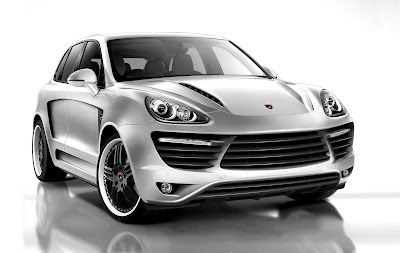
Porsche Cayenne rebuilding into the stylized dashing off-road coupe TOPCAR has successfully participated with its Porsche Cayenne Advantage and Porsche Cayenne Vantage GTR at the largest and most prestigious car tuning exhibition in Europe - Essen Motor Show. Due to the great majority of renovated cars it proves that the idea has been appreciated and managed to gain customers’ confidence.

In this connection, it is remarkable that the new Porsche Cayenne is going to be in a great demand and in fact to be a great opportunity to create the new Advantage and Vantage GTR renovated series.

Having gained the positive response all over the world for the Porsche Panamera aerodynamic body kit TOPCAR is on its way to develop a fresh package for the new Porsche Cayenne in three various manners:

Porsche Cayenne Advantage 2
Porsche Cayenne Vantage GTR 2
Porsche Cayenne Vantage 2
Porsche Cayenne Advantage 2

The Porsche Cayenne Advantage 2 project is designed to have your Cayenne stylized into dashing off-road coupe. Due to the idea of the rebuilding car body and installing Porsche 911 headlights your Porsche will gain a new look with the traditional Porsche styling cues.

Porsche 911 GT2

Porsche 911 GT2
Porsche 911 GT2
2010 Switzer Performance Porsche 911 GT2Porsche 911 GT2
Porsche 911 GT2

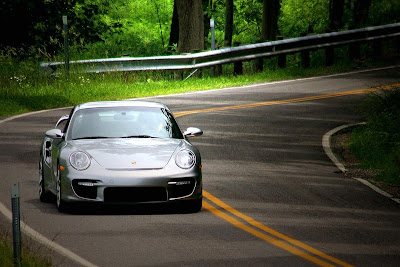
The Switzer GT2 R911S takes the firm's well-proven P800 GT2 package and pushes it further. Using race fuel, the R911 delivers well over eight hundred horsepower at the rear wheels, equating to roughly 50% more power than Porsche's GT2 RS, with Switzer's MONSTER intercoolers ensuring consistent engine performance lap after lap.

With a (conservative) 911 hp on tap, virtually nothing in the world can pass Switzer's R911S GT2 in a straight line. To maintain that advantage in the corners, Switzer's R911S features a Switzer-specific titanium inverted-front-strut, remote-reservoir suspension engineered by the track experts at JRZ. This isn't "racing-style" suspension; the hardware is a true JRZ racing setup that has been torture-tested in the Patron GT3 Cup and Grand-Am Rolex GT series – barely tamed for the street with a few easy knob-twists. Each one of Switzer's R911S cars will be feature hand-selected spring and damping rates, specifically catering to each client's track experience and level of aggression.

Switzer's R911S already offers a power-to-weight ratio which simply eviscerates Porsche's newest factory flagship - but for the customer who has to cut every last ounce of extra mass from the car, Switzer offers the R911S Carbon - an exclusive suite of lightweight carbon-fiber body panels that sheds weight from the R911S and lowers the car's center of gravity for maximum performance in advanced-level trackday and time-attack sessions. Developed by the low-mass experts at Seibon, the carbon panels are the final nail in the coffin for Porsche's factory GT2 RS.

Porsche:Panamera 4

http://p.webwombat.com.au/motoring/car-images/porsche-panamera-3.jpg
Panamera 4
http://www.highsnobiety.com/news/wp-content/uploads/2009/02/porsche-panamera-4.jpg
Panamera 4
http://p.webwombat.com.au/motoring/car-images/porsche-panamera-4.jpg

The new Panamera models feature an all-new, Porsche-designed 3.6-liter, 90-degree V6 engine with Direct Fuel Injection (DFI) that develops 300 horsepower and 295 lb-ft of torque. Built on the same line as the normally aspirated and twin-turbocharged 4.8-liter V8 engines found in the Panamera S, 4S and Turbo, this new engine propels the Panamera and Panamera 4 from 0 to 60 mph in 6.0 and 5.8 seconds, respectively (5.8 and 5.6 seconds with the Sport Chrono Package Plus option). Top test track speeds are 160 and 159 mph, respectively.

As a whole, these new models provide high levels of performance, agility and comfort and the same safety systems found in the V8 Panameras, yet they return even better fuel economy figures than the already efficient Panamera S, 4S and Turbo. The Panamera achieves 18 mpg city/27 highway while the all-wheel-drive Panamera 4 delivers 18 mpg city/26 highway, numbers that are no doubt appealing to consumers who demand driving excitement and fuel efficiency.

The Panamera and Panamera 4 MSRPs are $74,400 and $78,900, excluding destination.

Porsche Intelligent Performance = no gas guzzler penalty Like every Porsche, the Panamera and Panamera 4 were developed according to the Porsche Intelligent Performance philosophy -- more performance on less fuel, increased efficiency and lower CO2 emissions. U.S. models come standard with the revolutionary Porsche Doppelkupplungsgetriebe (PDK) seven-speed double-clutch gearbox and the Auto Start Stop function that saves fuel and reduces emissions by turning the engine off when it is not needed, such as sitting at a stop light. Like all Porsches except the 911 GT3 and 911 GT3 RS, neither is subject to a gas-guzzler tax. And both meet the strict EU5 emission standard in Europe and the LEV standard in the United States.

Porsche has always focused on superior efficiency and performance, and in the case of these new Panamera models these long-held tenets are not mutually exclusive. One example is consistent lightweight construction with the axles, doors, hood, front fenders and tailgate all made of aluminum. Likewise, the Porsche V6 is about 66 lbs. lighter than the V8, which contributes to the low overall curb weight of just 3,880 lbs. (1,730 kg) for the Panamera with the PDK transmission.

Like the proven V8 models, both the Panamera and the Panamera 4, as genuine Gran Turismos, combine a sporting character with a high standard of comfort and everyday driving qualities. Steel suspension is standard, and variable dampers and adaptive air suspension with additional air volume on demand are optional. This provides a wide range of suspension qualities and features, with a high level of motoring comfort on the one hand and extremely sporting driving dynamics on the other. Other standard equipment includes an electric moonroof and power liftgate, the Porsche Communication Management (PCM) system with navigation, Bi-Xenon™ headlights, Bluetooth® telephone connectivity, and the universal audio interface to connect an external audio source such as an iPod or a USB stick with the PCM system.
Related Posts Plugin for WordPress, Blogger...